
Affichage des articles dont le libellé est website. Afficher tous les articles
Affichage des articles dont le libellé est website. Afficher tous les articles
jeudi 31 mai 2012
5 Branding Tips for Your Launch

1. Logo and Website Design
We live in a culture that wants things to be aesthetically appealing. Having a firm understanding of what your business says in a visual sense can help you create a design and feel for your branding collateral.
The visual aspect of your logo and website should speak in both literal and figurative terms, about the character of your business. If you are a wholesale wine distributor, it make sense to have a bottle or a glass of wine in your logo, or perhaps you want something a little subtler. A bundle of grapes or a wine barrel could work just fine. Decide what characteristics you want your business to stand for about the industry you’re in, and try to visualize it. This will enable you to describe to developers what look you're going for. Your logo and website will define your business both online and offline, so make it something you’re proud of.
2. Social Network Business Profiles
These sites are an important part of your online influence, and a great avenue to reach your customers. Once you’ve decided that a business profile is for you, I would recommend looking into other companies you look up to, and note what they’re doing well with their profiles. You want to generate content that your fans will find interesting, and want to share. Some of this information can be deals, or information on products or services you provide, but you might want to also post articles or videos you find helpful, useful, or entertaining.
3. SEO
As a small business owner, the hardest obstacle you’ll have to overcome is being “seen." The Internet is littered with small business websites all vying for the same small corners of the web. It’s imperative you focus on driving more traffic to your site, and drive up your search engine optimization. Social networks can help a lot, as well as having a blog as part of your site. Identify ways you can reach your customers (advertising, partnerships, etc.) and take the necessary steps to get your name out there. The more unique visitors you can drive to your site, the better your Google rank will become, which in turn makes you more visible online.
4. Publicity
PR is another great way to make yourself visible both online and offline. If you’re involved in any sort of charitable work, alert local media so they might want to cover it. Position yourself online as an expert in your field, and make yourself available for comments and opinions. Target smaller publications and blogs at first to build up your persona, and create working relationships with the media. PR can get very expensive very quickly if you pay for it, so as a small business it makes the most financial sense to take care of it in-house. I offered to write articles for various publications on and offline to build up my reputation, which has to led to many free PR opportunities for my company.
5. Testimonials
Once your business is up and running, make sure you connect with your customers so you understand what is working and what isn’t working. Don’t be afraid to tweak your product or service, and be receptive to feedback. It’s important to understand that no matter how much experience you have in business, you never cease learning how to do business better. When your clients are happy and vocal about your product or service, ask them for a testimonial. You can share these on your site, and it will prove your worth to other potential customers as well as instill trust in possible future clients.
Dan Schawbel is the managing partner of Millennial Branding, a Gen-Y research and management-consulting firm. Subscribe to his updates at Facebook.com/DanSchawbel.
12:01 0
dimanche 6 mai 2012
What’s America’s Most Engaging Social Network? You’ll Be Surprised

Tagged users visited an average of 18 times each during March according to ComScore, second only to Facebook’s average of 36 visits per vistor. And each time a Tagged user visited the site, he or she stuck around for 12.1 minutes — which trailed only Tumblr (14.7 minutes) and beat out Facebook (10.9 minutes).
Tagged co-founder and CEO Greg Tseng says he’s happy about ComScore’s March data, but that his company has been among America’s most engaging social networks for about a year now. The secret to Tagged’s success? A pivot Tseng and co-founder Johann Schleier-Smith made around the beginning of 2008.
The longtime friends started Tagged in 2004, at the time angling it to be a Facebook-like social network for high schoolers. Eventually, however, Facebook expanded beyond a closed college network and allowed anyone over the age of 12 to join.
“We took a hard look and decided we weren’t going to win,” Tseng says. “But we had found out a lot of our users were actually using Tagged to meet new people, so that led us to pivot into a new space called ‘social discovery,’ where people use sites to make new social relationships.”
As opposed to sites like Facebook, where people primarily organize and maintain relationships established offline, Tagged functions mostly as a portal to meet new people online for romance or simply friendship. The site’s algorithms encourage users to connect based on shared interests, tastes and hobbies.
Tseng says Tagged’s 10 million core monthly active users form an average of 100 million new connections per month. The site has been profitable since 2008, and over the past year tripled its staff to a current count of more than 170.
With social discovery as a whole seen by many to be a rising tide, Tseng believes Tagged’s success will continue to grow.
“If I look out at the next five or 10 years, I really see social discovery as big as social networking — in some sense I think you can think of social discovery as the engine for social networking,” he says, referencing Dunbar’s number, which theorizes that humans can maintain an average of 150 connections at a time.
“Facebook is the place where you maintain your current 150,” he says. “And Tagged will be the place where you refresh that 150.”
Do you think social discovery is the next big thing? Let us know in the comments.
09:45 0
lundi 2 avril 2012
Nokia 'Smartphone Beta Test' Campaign Targets Competitor

At a first glance, there's no indication that we're looking at an official Nokia website. However, if you take a closer look at the top left, you can almost see the Nokia logo under that black chalk. That, and some references to Nokia's website found inside the web page's code by WPCentral.
On to the content: there are three videos, Exhibit A, B and C, where a certain phone that is losing signal is referenced, another one (or the same, really) which has its screen all washed out in the sun and a third one which seems to be too fragile. You'd be inclined to immediately think Apple but then again a question should immediately follow up: why is everyone picking on Apple? (yes, Samsung too). But then again, it might not be all anti-Apple.
Regardless, the campaign (if it turns out to be one, which wouldn't surprise us with lots of cash and brilliant minds at Nokia) is both funny and serious at the same time, but definitely a great one. Check it out at the source link below and let us know of your comments!
10:20 0
lundi 27 février 2012
A Surefire Way to Drive Visitors to Your Website

While traditional public relations is still an important and relevant strategy for your company, creating an online press release can be a good way to get immediate exposure and traffic to your website. Additionally, the best press releases will offer you the possibility to be quoted or have your company’s name mentioned on many other websites as well as create dozens of backlinks (links from other websites to your website which help with search engine optimization).
Here are five tips to keep in mind when developing your small business's online press release campaigns:
1. Plug into a current conversation
People are actively searching the Internet for solutions to their problems (i.e.: how do I get more traffic to my website?) or to research a particular topic or product (i.e.: is direct mail still effective?).
One of the best ways for your website to be found online is to create a timely press release around that topic. For example, using the once trending topic on presidential candidate Rick Santorum’s sweater vest, we created a press release entitled: “Rick Santorum’s Sweater Vest Contains a Million Dollar Lesson for Entrepreneurs.”
The release was distributed using an online press release distribution service, and was read by thousands of people, shared on social media, picked up by bloggers, posted throughout several media channels around the world and instantly drove hundreds more targeted visitors to our website.
2. Do not overtly promote yourself
Media is a tool to share newsworthy information that educates, informs and entertains the public. Advertising is for promotions. It’s important not to confuse the two.
If you want your press releases to be widely distributed and liked by the press, do not overtly promote your products or services. Instead, offer timely information that is relevant to your readers. Your commentary will position you as a thought leader and an expert in your field. The result will be that prospects will visit your website to find out more about your company and its offerings.
Press releases give you the opportunity to add a quick “About” section at the footer of your release. This is your opportunity to tell the reader about you, your company and how to get more information.
3. Optimize your releases for search engines
Once submitted, press releases are instantly distributed to the search engines; however, if your press release isn’t optimized, it doesn’t matter how good the content is, nobody is going to find it.
Be sure to use a keyword rich headline. In the example above, the headline for the article “Rick Santorum’s Sweater Vest Contains a Million Dollar Lesson for Entrepreneurs” helped the press release to rank well for the trending search query “Rick Santorum’s Sweater Vest.” Have a solid headline and tastefully incorporate your keywords inside of the release as well.
Using a keyword tool such as Google Trends will help you identify what topics are trending.
4. Be credible
The best press releases include a quote from you or the public face of your company (usually in the second paragraph, the first paragraph details why the press release is newsworthy). It also makes relevant use of statistics, survey results and applicable studies to establish additional credibility and enhance your position as an authority.
It’s important to note that online and offline press releases have different purposes and produce different results. Online press releases are designed to rank high in the search engines with the intent of directing readers to your website. Offline press releases are distributed directly to media outlets with the purpose of getting a phone, radio or television interview for a larger (possibly featured) story about you or your company. Credibility is key for either approach.
5. Stay in front of the media
The more frequent and consistent your press releases, the more the media will recognize your name and begin to pay attention to your message. Submitting a press release with an ideal goal of once per week (or a minimum of once per month) is a good general guideline.
Once you submit a press release, contrary to what you might read elsewhere, you do not want to follow up with reporters unless you already have a pre-existing relationship with them. Reporters are busy people and can receive upwards of hundreds of press releases in a single day and phone calls are often seen as a disturbance than a welcomed gesture.
There are many online distribution services to consider when submitting your release. The most popular fee-based distribution services are PR Newswire, PR Web and BusinessWire. They will offer you the widest distribution to thousands of journalists and will increase your chances of additional distribution through national online and offline media. Other free services include i-Newswire, PR Log, and 24-7 Press Release.
Remember, reporters are always looking for stories that are interesting and engaging to the public. If you help the media by creating good content for their readers, they will help you obtain additional exposure. It’s a win/win for everyone.
12:23 1
mercredi 22 février 2012
Sony Launches New Sony Mobile Website, Kills SonyEricsson.com
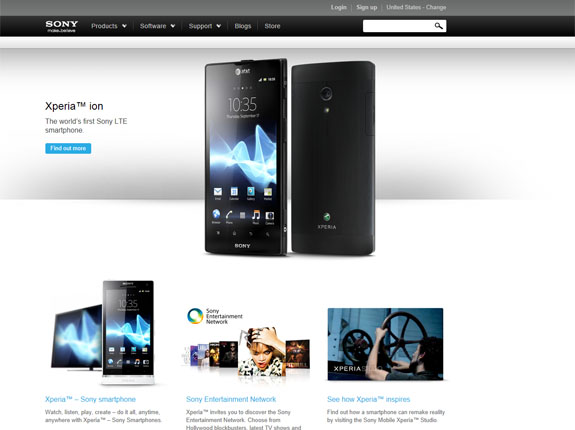
After we posted "Sony Ericsson Dead, Long Live Sony Mobile Communications" we should have seen this coming as sonyericsson.com is history and the new sonymobile.com is taking its place.
It will take a little bit of getting used to it but the new website seems to borrow the main design principles of Sony's main web page. The AT&T Xperia Ion is greeting you on the front page of the American website while the Xperia S is featured as you enter the U.K. page. According to reports, @SonyXperia is the new Twitter handle to follow once it will be up in place and working, as implied in the press site.
08:47 1
dimanche 19 février 2012
What Every Successful Small-Business Website Needs

Creating the perfect website isn’t an exact science, but a few guiding principles will help you attract and retain an audience of loyal customers and clients.
To find out how to make your website stand out, we spoke with Ron Wright and Tony Escobar. Wright has helped businesses build a solid Web presence since 1998 at Accentix. Escobar is a 25-year-old entrepreneur who helped launch AMTG Solutions to provide web services to small businesses.
Escobar says you need to make your business stand out and get your visitors to act. Refining your website in a few key ways helps you present the best product to your online clientele.
Quality content
Content is the most important foundational element of any small-business website.
If you're selling a product or service, offer enough information about that product or service that prospective customers understand what it is. They should also be enticed to buy it, based on the function you describe or the need your product satisfies.
“The whole point of the website is to get visitors to contact the company, make a purchase or visit your location,” Escobar says, and that hinges on its content. “A good site provides users the exact content the company wants them to act on.”
All the text on your site must be written well. If writing isn't your thing, Wright suggests leaving it to a professional by contracting out the work to a freelance copy writer. It might seem like a big up-front cost, but it's actually an important investment to make.
Clear vision of the audience
Without a keen awareness of who your ideal customers are, it's hard to properly tailor your content and website to appeal to them.
Small-business owners often don't narrow their focus enough.
“I always try to counsel my clients to consider who the visitor is and then give that visitor a clear path on what to do next,” Wright says. That’s hard to do if you’re targeting too broad an audience.
Keywords
It's important to understand what search terms and keywords drive visitors to your site. That way, you know which words to use when you describe your products or services to maximize page traffic.
Google, for example, uses a keyword-based algorithm to rank search results. There are tools to help you understand whether you're taking proper steps to capitalize on that.
You can advertise your business on Google using Google AdWords. It has a feature that helps you find out if your keyword choices are on-point or off the mark. Additionally, analytics software like Google Analytics allows you to see which search terms and other Web pages steer people to your site.
By taking stock of that data and regularly monitoring it, you can build comprehensive strategies that will help search results tip in your favor.
A clean, readable look
Aesthetics are subjective, Wright and Escobar agree, but designing a website according to your own tastes is a big mistake. Instead, keep these few guidelines in mind.
First, be professional and have a look to match. You want people to take your company seriously? Then invest in a site that looks legitimate. Unless you're a savvy site-builder, hire a consultant. Your website is the image you're sharing with a whole world of potential customers. Make it good.
"Any hint of being outdated or having an unpleasant design can be a major turnoff for prospects," Escobar says. "After all, small businesses are not alone, they have to compete with the guy next door. The company that provides the best first impression usually gets the sale."
Second, don't overwhelm. Lots of graphical additions and colorful sections on your site looks messy and confusing. Keep a streamlined approach and focus on simplicity.
Simple navigation
A comprehensive (but to-the-point) sidebar that displays each of your pages' offerings is the easiest way to shepherd visitors to the various parts of your site without frustrating them.
Keep it simple and straightforward, Escobar says. For example, say "About" instead of "About Our Office" to avoid clutter and confusion.
About your company
The autobiographical section of your website, the About tab, is a crucial trust-builder and attention-grabber.
This page should never be generic, Wright says. It's a history of your company that details who you are and what you do, written in a tone that matches your company's culture. Include personal bios of your top management staff. That gives a sense of transparency and openness to what you do and fosters connection with prospective customers.
"People are not as concerned with what you do as who you are," Wright says, noting that the About sections of a website are among the most-read.
Contact us any way you want
Contact information tells your customers you are reachable and at their service, whenever they might need you.
Don't be shy about listing ways to get in touch across platforms and devices, Wright says. It gives the best impression of accessibility and engagement when you offer e-mail, phone, mail and social media options.
Escobar suggests going a step further and including contact information at the footer of each individual page, where visitors are accustomed to finding general information.
Social media integration
Building in social media, like your Twitter and Facebook feeds, to your website helps boost your engagement on those platforms and allows you to more easily keep in touch with your customer base, Escobar says.
He suggests adding social icons in the main navigation bar and in the page footers.
14:04 1
vendredi 10 février 2012
Anonymous Takes Down CIA Web Site

"CIA TANGO DOWN: https://www.cia.gov/ #Anonymous," the @YourAnonNews feed tweeted around 3:30pm Eastern.
The CIA.gov website has been unresponsive for about an hour. Anonymous did not release details about the attack, but the group usually uses distributed denial of service (DDoS) attacks to take down its targets.
Last month, in the wake of the Megaupload shutdown, Anonymous also took down the websites for the Department of Justice, the Copyright Office, and the FBI.
Just last week, meanwhile, it also leaked a conference call between the FBI and Scotland Yard in which agents discussed ongoing hacker cases. Anonymous reportedly accessed the call because a foreign police official who received the conference call invite forwarded it to a personal account, where it was intercepted by Anonymous.
This week, the hacker collective focused its attention on overseas issues. It leaked emails from the office of Syrian President Bashar Assad, which included prep material for a recent Barbara Walters interview. It also released emails from the legal team who represented Frank Wuterich, the U.S. staff sergeant who led an assault on the Iraqi city of Haditha that left 24 unarmed civilians dead.
Also this week, a hacker loosely affiliated with Anonymous posted code from security firm Symantec on The Pirate Bay. The hacker had reportedly demanded a $50,000 ransom in exchange for keeping the code offline, but negotiations broke down.
15:35 0
vendredi 27 janvier 2012
Eight Easy Ways to Boost Your Website on a Budget

The following tips from small-business owners will make your site discoverable to potential clients and attractive to a multiple-visit viewer. These ideas won’t cost you a dime or take forever to accomplish.
Boot-up your printer.
Blog strategically
If you don’t have a blog attached to your website, now is the time to set it up. Log on to WordPress and create a blog for free. Then, link the blog to your website or incorporate it by adding an extra page to your toolbar (YouTube tutorial).
Now that your blog is set up, what will you write about?
Write Q&As on influencers in your industry, suggests Rusty Shelton, founder of Shelton Interactive. If you're launching an accounting firm, reach out to accounting professors in your area and ask to interview them. Ask them about the latest accounting trend or related news, and transcribe the interviews into blog posts. Ask the professors to link their own Facebook pages or websites to your post to give you more exposure.
Shelton recommends blogging at least three times a week and writing 500 to 750 words per post. You don’t have to interview influencers in each post. Write about current events through the lens of your business expertise. You might even attract journalists looking for a credible expert to comment on a news story.
“Last year, a neurologist client wrote a blog post about the Gabby Giffords tragedy,” says Shelton. “He got a call from 20/20 to comment. It was tremendous publicity for him.”
You can also write up case studies. If you see someone in your industry doing something interesting, call and ask for an interview. Chances are they’ll be thrilled to get the publicity and the two of you can cross-promote—a win-win.
Incorporate video
Adding video to a website has never been easier. Just take a smartphone or Flip video camera (available for about $70) and start recording. Begin with a welcome video that explains what your business is about and introduces you as the owner, says Shelton. Put the video on YouTube or Vimeo and upload it to your homepage.
“Having a video on your homepage is a great way to instantly connect with the site visitor,” he says.
Consider posting a video blog every few weeks. Focus on a topic area you're passionate about or ask a client to give an on-camera testimonial. Interview industry thought leaders and record how-to videos.
“Plumbers can do a video on how to unclog a drain or how to deal with a flood,” Shelton says. “Think about real issues people are facing and provide valuable information that will help them. It will build good will among potential customers and they'll share it with others.”
Offer free resources in exchange for e-mails
Post valuable information and you may snag a client for life. Shelton suggests that you create a box on your homepage called "Free Resources." Write a list of useful information and save it in PDF format.
For example, if you are a home designer, make a checklist for people to run through before choosing a color palette. If you’re an accountant, create a checklist of documents needed to prepare taxes accurately.
Post the downloadable PDF in your Free Resources box, and allow downloads only if viewers subscribe to your e-mail newsletter.
“The exchange is important; it allows a business owner to build a direct line to potential customers,” notes Shelton. “Just make sure to change out resources often. You don’t want your website to look like a brochure where there is no reason to go back.”
Register with business-listing sites
Discoverability is vital to the success of a small-business website. Entrepreneurs should register business sites on Yelp and Yahoo Local. Try Bing Local and Google Places. Peter T. Boyd, founder of PaperStreet Web Design says doing this will not only help your search engine optimization (SEO), it will also validate your existence to customers searching for your services.
Add social media-sharing tools
Have you noticed how every article on The New York Times website gives you the option to Tweet it and share it on your Facebook page? This helps to spread the word about articles and brands.
Small-business owners should offer social media-sharing tools on their sites.
“Search is shifting to social,” says Alicia Marie Phillips, a digital-marketing consultant. Every time you type a search term into Google, the first few links that appear are related items shared by people in your network. Adding sharing tools on your site broadens your reach to potential customers.
“If you don’t have a way to tap into Facebook, Twitter and Google+ on your site, you are missing out,” Phillips says. “People really pay attention to what their friends share.”
If you're not sure how to add social media tools to your site (YouTube tutorial).
Offer daily or weekly deals
As a consumer, nothing catches my eye more than a great deal. Try offering a daily or weekly deal that is exclusive for your online customers and publicize it on your homepage. Talk to your customers in person about these deals, too, recommends Ben Nesvig, social media manager at Snap Social Media.
“Do what you can to blur your offline and online business worlds,” Nesvig suggests. “Consider doing merchandising that promotes your website, along with an incentive to go there.”
Pay attention to keywords
The better your search-engine ranking, the better your potential to capture more page views and, ultimately, more customers. How do you cement yourself on Google’s first page?
“Pay attention to the Google Keywords Tool,” recommends Phillips. “Run a few searches for words that describe your business. The tool will tell you what keywords perform well in search and the ones that don’t. Incorporate popular words into your site to increase your ranking.”
Watch your analytics
Check out the backend workings of your website and you might be surprised by what you find. Register for Google Analytics and you'll be able to see which blog posts are doing best on your site, what keywords are bringing up your homepage and which pages are getting the most clicks.
“Pay attention to these analytics," says Jann Mirchadani, owner of Marketing Café, a digital marketing firm. "They will help guide you in creating more content that is meaningful to your audience."
What website improvement ideas can you share with small-business owners?
14:22 0
samedi 21 janvier 2012

Feds Shut Down Megaupload.com File-Sharing Website

An indictment accuses Megaupload website.com of costing copyright holders more than $500 million in lost revenue from pirated films and other content. The indictment was unsealed one day after websites including Wikipedia and Craigslist shut down in protest of two congressional proposals intended to thwart online piracy.
The Justice Department said in a statement said that Kim Dotcom, formerly known as Kim Schmitz, and three others were arrested Thursday in New Zealand at the request of U.S. officials. Two other defendants are at large.
Megaupload website was unique not only because of its massive size and the volume of downloaded content, but also because it had high-profile support from celebrities, musicians and other content producers who are most often the victims of copyright infringement and piracy. Before the website was taken down, it contained endorsements from Kim Kardashian, Alicia Keys and Kanye West, among others.
The Hong Kong-based company listed Swizz Beatz, a musician who married Keys in 2010, as its CEO. He was not named in the indictment and declined to comment through a representative.
Before the site was taken down, it posted a statement saying allegations that it facilitated massive breaches of copyright laws were “grotesquely overblown.”
“The fact is that the vast majority of Mega’s Internet traffic is legitimate, and we are here to stay. If the content industry would like to take advantage of our popularity, we are happy to enter into a dialogue. We have some good ideas. Please get in touch,” the statement said.
The site boasted 150 million registered users. A lawyer who represented the company in a lawsuit last year declined comment Thursday.
Megaupload website is considered a “cyberlocker,” in which users can upload and transfer files that are too large to send by email. Such sites can have perfectly legitimate uses. But the Motion Picture Association of America, which has campaigned for a crackdown on piracy, estimated that the vast majority of content being shared on Megaupload website was in violation of copyright laws.
The website allowed users to download films, TV shows, games, music and other content for free, but made money by charging subscriptions to people who wanted access to faster download speeds or extra content. The website also sold advertising.
The indictment was returned in the Eastern District of Virginia, which claimed jurisdiction in part because some of the alleged pirated materials were hosted on leased servers in Ashburn, Va.
Dotcom, a resident of both Hong Kong and New Zealand, and a dual citizen of Finland and Germany, made more than $42 million from the conspiracy in 2010 alone, according to the indictment.
Dotcom is founder, former CEO and current chief innovation officer of Megaupload website.
15:52 0
vendredi 20 janvier 2012
Anonymous shut down justice.gov & doj because Megaupload was taken down

Video rights to: CNN, This video is re-posted for informational purposes.
Government's case against file-sharing site overreaching, attorney says
By Michael Pearson, CNN
(CNN) -- U.S. authorities overreacted in shutting down the online file-sharing site Megaupload and seeking criminal charges against its executives, the company's American lawyer said Friday.
Anonymous‘s distributed denial of service attacks on the U.S. Department of Justice website and others Thursday were a new type of blitz, according to security firm Sophos.
Previously, DDoS attacks happened when someone installed a low orbit ion cannon program that lets computers blast a website with unwanted traffic, causing the target site to crash. In this week’s attack, though, Sophos said simply clicking a link would do the damage. So unsuspecting Internet users could have participated in the DDoS attack without any indication.
“We’ve seen many links posted on Twitter, and no doubt elsewhere on the Internet, pointing to a page on the pastehtml.com website,” Sophos said in a blog post. “If you visit the webpage, and do not have JavaScript disabled, you will instantly, without user interaction, begin to flood a website of Anonymous’s choice with unwanted traffic, helping to perpetuate a DDoS attack.”
Check out the video above to learn more about the attack and how it worked.
17:13 0
Inscription à :
Articles (Atom)


